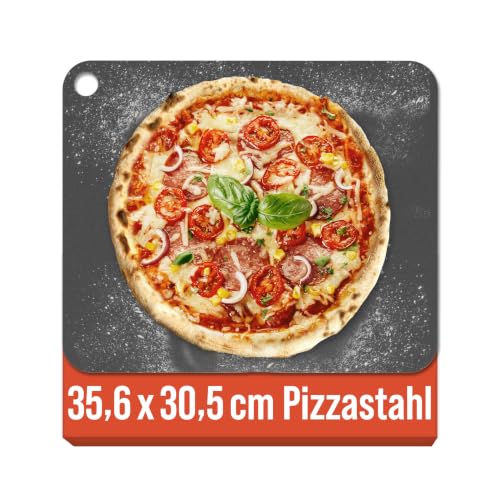
Finding the best pizza peel for your home setup makes launching and retrieving pizzas far simpler. Our picks are based on the manufacturers' information on the Amazon.co.uk listings, read on 28 November 2026, and we did not test them.
Key points in 30 seconds
- A wooden peel helps raw dough slide without sticking, while a thin aluminium blade slips easily under a baked pizza.
- A perforated peel lets excess flour fall away, which can help keep the pizza base cleaner.
- Match the blade size to your pizza and oven opening, and choose a handle length that suits your cooking space.
- The Relaxdays wooden XXL offers the longest total length in our chart at 78 cm, while the Chef Pomodoro aluminium model folds down for easier storage.
Why a pizza peel
A pizza peel is the tool you use to slide a raw pizza onto a hot stone or steel, turn it during baking, and take it out when it is done. Without one, it is tricky to move a topped dough safely into a hot oven or onto a grill. The flat blade and long handle keep your hands away from the heat and help you place the pizza exactly where you want it.
Wood, aluminium or perforated
The material of the blade changes how the peel handles. A wooden peel tends to hold raw dough with less sticking because the surface absorbs a little moisture and flour grips the wood grain. This makes launching simpler, especially with wetter doughs. An aluminium peel is thin and rigid, so it slides under a baked pizza more easily than a thicker wooden blade. It is also lighter and often has a longer lifespan outdoors.
A perforated peel has holes across the blade. These let excess flour and semolina fall through instead of being carried into the oven, which can reduce burnt bits on the stone or steel. The holes also reduce surface contact, which some bakers find helps the dough release more cleanly. The trade-off is that a perforated blade can leave slight marks on the base of the pizza, though this is purely cosmetic.
Size
Getting the size right matters more than the material. The blade should be a little larger than the pizza you plan to make, so a 30 cm pizza needs a blade at least that wide. At the same time, the blade must be smaller than the oven opening and the stone or steel it will slide onto, otherwise you cannot manoeuvre it inside.
Handle length depends on where you cook. A short handle is easier to manage in a home oven where you stand close to the door. A long handle keeps you further from the heat of a grill or a dedicated pizza oven. If you use both, a folding or detachable handle can be a practical middle ground.
Material
Wood, solid aluminium or perforated aluminium.
Blade size
Larger than your pizza, smaller than the stone and the oven opening.
Length
A long handle for a grill or pizza oven, a shorter one for a home oven.
Storage
A folding or detachable handle takes up less space.
Our selection
Pizza Lover perforated pizza peel

This model suits bakers who want a non-stick surface and a sturdy build. According to the manufacturer, the blade is made of hard-anodised aluminium that is 1.5 mm thick, with a non-stick finish. It is perforated and measures 30 x 30 cm, and the total length is 70 cm. The handle is fixed with three screws, which the maker says adds rigidity.
AMZBBQ perforated pizza peel

The AMZBBQ perforated peel is designed with household ovens in mind. The maker states the blade is hard-anodised aluminium and measures 30 x 30 cm. The total length including the handle is 66 cm, which the manufacturer describes as sized for household ovens. The perforations run across the blade to let flour fall through.
G.a HOMEFAVOR perforated pizza peel

This peel features a rectangular blade shape that some cooks prefer for aligning pizzas in narrower ovens. According to the manufacturer's product title, the blade is hard-anodised aluminium and measures 12 x 14 inch (30.5 x 35.6 cm); one line of some listings says 30 x 30 cm, which does not match. The perforated surface helps reduce excess flour on the stone.
Chef Pomodoro aluminium pizza peel
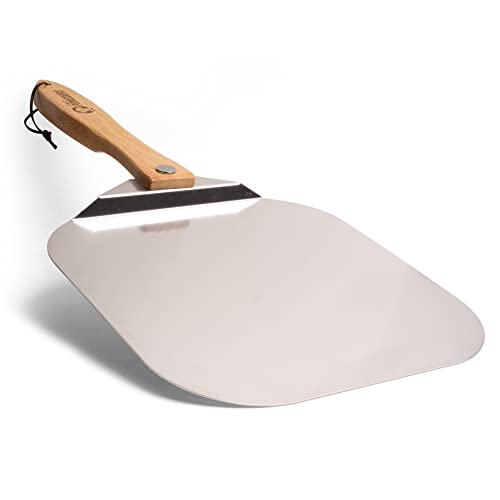
This solid aluminium peel is a good fit for anyone who values a thin blade and compact storage. The maker states the blade is 0.15 cm thin and measures 30 x 36 cm. The handle is made of pine, folds down to 25.4 cm, and extends to 61 cm long when unfolded. The manufacturer lists the weight as 625 g. Because the blade is solid rather than perforated, it presents a smooth surface to the pizza base.
Relaxdays wooden XXL pizza peel

This wooden peel is aimed at bakers who prefer a traditional material and an extra-long handle. According to the manufacturer, it is made of wood and the overall dimensions are 1 x 30 x 78 cm. The handle alone is 46 cm long, which the maker describes as extra-long. The wooden surface helps raw dough release with less sticking, making it a dependable choice for launching.
How to slide a pizza off the peel
Dust the peel lightly with flour or fine semolina before placing the stretched dough on it. This creates a layer of tiny ball bearings that help the dough move. Give the peel a gentle shake before adding toppings: if the dough slides freely, you are in good shape. If it sticks, lift the edge and add a little more flour underneath.
Work quickly once the toppings are on, because moisture from the sauce can soak into the dough and make it stick. Avoid overloading the pizza, as a heavy topping makes launching harder. To slide the pizza onto the stone or steel, use one short, confident forward motion and a quick pull back. Hesitating mid-launch often causes the pizza to fold or stick.
Other guides
- Best pizza stones: cordierite and size (UK)
- Pizza steel vs pizza stone: which to buy
- How to clean a pizza stone without damaging it
FAQ
Which is better, a wooden or a metal pizza peel?
A wooden peel is often better for launching raw dough because the surface grips flour and reduces sticking. A thin metal peel, especially aluminium, is better for retrieving a baked pizza because it slides under the crust more easily. Many home bakers keep one of each for the two jobs.
Do I need a perforated pizza peel?
A perforated peel is not essential, but it helps excess flour fall away before the pizza hits the stone. This can mean fewer burnt flour spots on the base and a cleaner oven floor. If you tend to use a lot of flour when shaping dough, a perforated model can be a useful upgrade.
What size pizza peel should I buy?
Choose a blade that is a little larger than the pizza you want to make, and make sure it fits through your oven door and onto your stone or steel. For a typical 30 cm home-oven pizza, a blade around 30 to 36 cm wide works well. Handle length is a matter of comfort: shorter for an indoor oven, longer for a grill or outdoor pizza oven.
Sources
The figures cited in this guide were read on 28 November 2026 on the Amazon.co.uk listings of the products mentioned, based on the manufacturer texts provided there. The G.a HOMEFAVOR listing states the blade size in centimetres and inches; one line of some listings says 30 x 30 cm, which does not match the 12 x 14 inch (30.5 x 35.6 cm) figure in the product title.