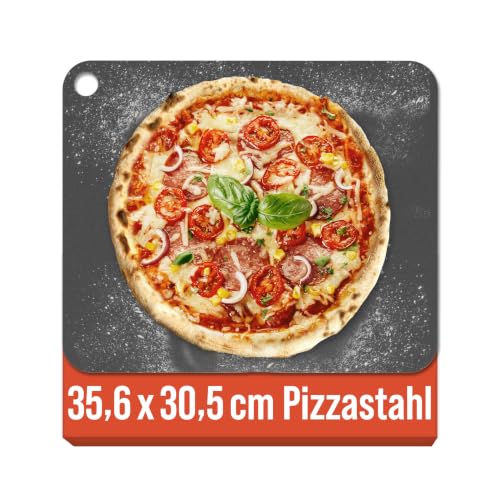
Knowing how to clean a pizza stone properly keeps it working well for years, and it is simpler than many people think. The picks below are based on the manufacturers' information on the Amazon.co.uk listings, read on 28 November 2026, and we did not test them.
Key points in 30 seconds
- Let the stone cool completely before you touch it: a hot stone can burn you or crack from thermal shock.
- Use only a scraper, a dry brush and a cloth: no oil, no dishwasher.
- Stains and dark spots are normal; you are removing stuck bits, not restoring the original colour.
- A pizza steel needs different care: keep it dry and re-oil it according to the maker's instructions.
Before you start: let the stone cool down completely
Never try to clean a pizza stone while it is hot or even warm. A sudden temperature change, like a damp cloth on a hot surface, can cause thermal shock and crack the stone. It is also a burn risk for your hands. The maker of the Pizzacraft brush states that you should let the stone or oven cool to room temperature before brushing, or the bristles can burn. Leave the stone in the switched-off oven with the door ajar until it is cool to the touch, then lift it out carefully.
Step by step: how to clean a pizza stone
- Scrape off stuck residue. Use a plastic or metal scraper to gently lift any burnt-on bits of cheese, sauce or dough. Work at a shallow angle so you do not gouge the surface.
- Brush dry. Take a pizza stone brush with stiff bristles (brass or stainless steel) and brush the entire surface to remove loose flour and debris. Do this over a bin or sink.
- Wipe with a dry or slightly damp cloth. If a little dust remains, wipe the stone with a dry cloth. For stubborn marks, use a cloth that is barely damp (wrung out completely) and wipe lightly. Do not rub hard.
- Let it dry completely before the next use. Stand the stone on its edge or in an airy spot until it is bone dry. Any moisture left inside can turn to steam in the oven and crack the stone.
- 1
Let it cool
Wait until the stone is completely cold.
- 2
Scrape
Lift baked-on residue with a scraper.
- 3
Brush
Brush the surface dry, without soap.
- 4
Wipe if needed
Use a damp, not dripping, cloth; never soak the stone.
What not to do
- No detergent. The stone is porous and will absorb the taste, which can then transfer to your pizza. The manufacturer Unicook states no soap.
- No oil or grease. Do not season a pizza stone or apply any oil. The maker Unicook states no oil.
- No dishwasher. The intense water, heat and detergent will ruin the stone. Unicook states the stone is not dishwasher safe.
- Do not soak it. Submerging the stone in water saturates it and can lead to cracking when heated.
- Do not wet a hot stone. Thermal shock from water on a hot stone can crack it instantly.
Stains and dark spots
Over time, a pizza stone will develop dark patches and stains from oils and burnt flour. This is completely normal and does not affect how the stone bakes. The goal of cleaning is to remove stuck-on food residue, not to get the original pale colour back. A well-used stone looks seasoned, and that is a sign it has been making good pizza.
And a pizza steel? Different care
A pizza steel needs a different approach. It is not porous like a stone, but it can rust. The care routine is simple: after it has cooled, scrape off any residue, wash or wipe it by hand (Baking Steel states hand wash only), dry it at once, and then apply a very thin layer of oil as directed by the manufacturer. Never soak it or put it in the dishwasher. For more detail, see our guide on pizza steel vs pizza stone: which to buy.
Brushes and scrapers: our selection
A good brush and scraper make cleaning much easier. Here are three options from Amazon.co.uk, with their stated features.
Pizzacraft pizza stone brush

This compact brush suits indoor oven stones where storage space is tight. According to the manufacturer, it has a head measuring 4 x 5 inches with stainless-steel bristles and a scraper on the back. The handle is made of hardwood. The maker states you should let the stone or oven cool to room temperature before brushing, or the bristles can burn.
G.a HOMEFAVOR pizza oven brush with scraper
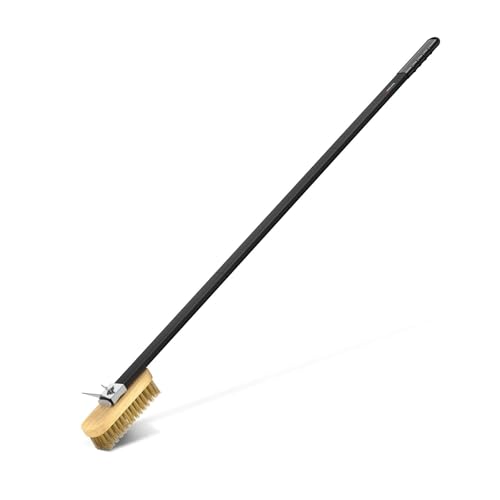
Designed for deep pizza ovens where you need to keep your hands away from the heat, this brush has a long reach. The maker states it has brass bristles and a removable aluminium handle that can be set to 120 cm, 80 cm or 40 cm. A metal scraper is built into the back of the head.
Chef Pomodoro pizza oven brush with scraper

This model offers an adjustable length for different oven depths. According to the manufacturer, it has heat-resistant stainless-steel bristles and a telescopic handle that extends from 55 cm to 87.7 cm. It includes a built-in scraper and a hook to hang it up.
Other guides
- Best pizza stones: cordierite and size (UK)
- Best pizza peels: wood, aluminium, perforated
- Pizza steel vs pizza stone: which to buy
FAQ
Can I use a pizza stone brush on a hot stone?
No. The maker of the Pizzacraft brush specifically states you must let the stone cool to room temperature first, or the bristles can burn. More importantly, touching a hot stone with anything damp risks thermal shock that can crack it.
Why does my pizza stone have dark stains that will not come off?
Those stains are oils and flour that have baked into the porous surface over time. They are permanent and completely normal. Cleaning aims to remove stuck food debris, not to restore the stone to a like-new appearance.
What is the best tool to clean a pizza stone?
A combination of a rigid scraper and a stiff-bristled brush works best. Use the scraper to lift burnt-on bits, then the brush to sweep away loose flour and debris. A dry or barely damp cloth can finish the job once the stone is cool.
Sources
The figures and care instructions cited were read on 28 November 2026 on the Amazon.co.uk listings of the products mentioned, using the manufacturer texts. The Unicook care points (no oil, not dishwasher safe) come from the listing of a Unicook pizza stone, and the Pizzacraft cooling instruction comes from the Pizzacraft brush listing. The G.a HOMEFAVOR and Chef Pomodoro brushes state no specific cooling requirement on their listings.